AOSIS Statement G77 and China Preparatory meeting
Twenty Ninth Conference of the Parties to the UNFCCC
AOSIS Statement G77 and China Preparatory meeting
09 November 2024, Baku Azerbaijan
9am
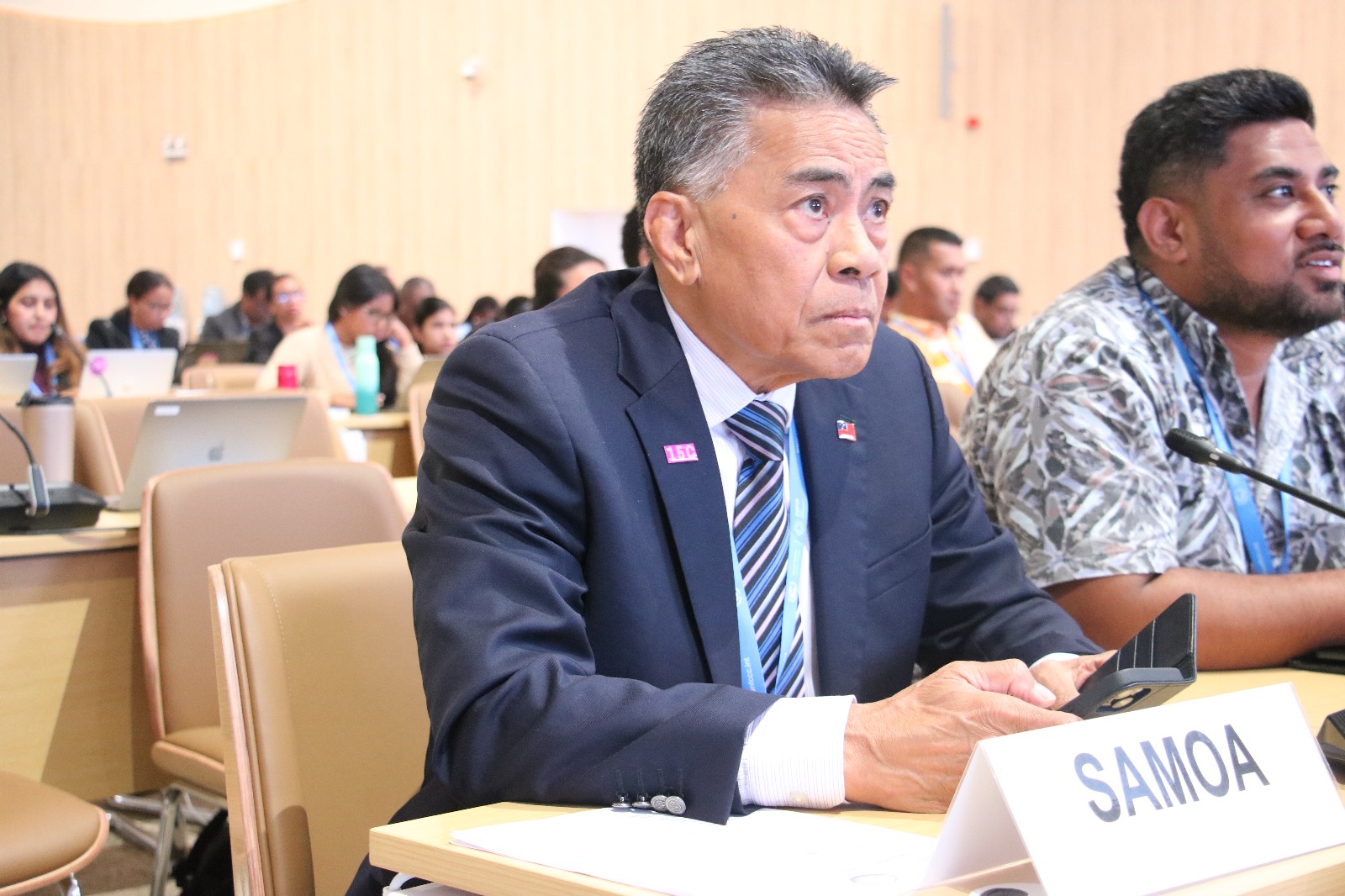
Opening Remarks from the AOSIS Chair
• Thank you, Chair, for the opportunity to reflect on the COP29 agenda. I wish to
highlight a few key priorities for AOSIS.
• First, we believe that adopting the COP29 agenda early is essential, as we have
significant ground to cover here in Baku. The list of agenda items continues to
expand since our arrival, underscoring the importance of a timely start.
• We have seen how the evolving agenda could hinder a successful outcome in this
process. It is essential that these additional items do not interfere with our
substantive work moving forward. AOSIS urges that, as developing countries, we do
not become an obstacle to progress, as this COP is of critical importance to us.
• Our second point is the importance of a cover decision that drives the
implementation and operationalization of the 1.5°C goal. This is a critical step in
advancing ambition, as emphasized throughout this COP. The urgency for climate
action resonates globally, and we must act swiftly to demonstrate international
cooperation in addressing climate change on the ground. The shifting global
landscape calls for renewed confidence in multilateralism, and we have a
responsibility to deliver on this, aligning with the theme of this COP.
• AOSIS views COP29 as a critical opportunity to accelerate climate action. The
timely submission of NDCs aligned with the 1.5°C pathway, as highlighted in last
year’s GST outcome is of urgency. It is essential to elevate the discussions on
mitigation and achieve a substantive outcome from the Mitigation Work Programme
here in Baku. We also call for timely submissions of Biennial Transparency Reports
(BTRs).
• Thirdly, we believe COP29 must deliver on the NCQG in a way that leaves no one
behind, particularly those with the least capacity to address climate change.
Recognizing the special circumstances of SIDS is essential, including establishing a
2 minimum access floor for SIDS within the NCQG decision. This decision should be
grounded in the needs and priorities of developing countries and must remain
aligned with the principles of the Paris Agreement.
• It is crucial that we remain fully committed to the Paris Agreement as we work to
operationalize this key enabler. This new goal will shape our pathway to achieving
the 1.5°C target set nearly a decade ago in Paris. Current trends indicate we are
exceeding this temperature goal; as we redefine our approach, our actions must
align with the Paris Agreement. Developing countries now have an opportunity to
pursue a development path that is sustainable for our planet. The only way to
achieve this is by staying true to the purpose and objectives of the Paris Agreement.
• Our group of developing countries is highly diverse, with varying needs,
development levels, and capacities to address climate change. To effectively
uphold the interests of the G77 and China as a whole, it is essential that we
prioritize and protect the interests of those parties with the least capacity. By doing
so, we ensure a comprehensive and fully integrated approach to addressing our
shared challenges.
• AOSIS believes that unity within the G77 is essential for achieving successful
outcomes in Baku, particularly on critical issues such as finance, adaptation, and
loss and damage. However, we emphasize the need to approach this unity with
careful consideration to ensure that this unity does not come at the expense of any
group’s interests.
• Our fourth points is with regard to the GST. We remain steadfast in our commitment
and optimistic that the key issues before us will be addressed here in Baku. It is
crucial that we maintain focus on the implementation of the GST outcomes,
particularly the energy package, which is vital for advancing the transition to
climate-resilient pathways. Looking ahead to future GSTs, the IPCC must continue
to play a central role, as we saw its pivotal contribution last year. AOSIS has always
been, and will remain, a strong advocate for science-based decision-making. Given
that the UNFCCC does not produce comprehensive scientific assessments or
conduct thorough scientific reviews of the current climate status, the inclusion of
science in this process is essential to avoid undermining its integrity.
• On matters related to adaptation, AOSIS want to ensure that Article 9.4 is
operationalized in the context of GGA. Special needs and circumstances of SIDS
and LDCs is not something we can’t overlook. Our NDCs presents several of adaptation efforts and pathways that we would require provision to access grant-based finance for adaptation measures.
• On the GGA work programme on indicators, we would like to address the uneven
representation of SIDS across expert groups, which is an issue for most of the subgroups within the G77. This imbalance risks sidelining some SIDS priorities in themes without a SIDS expert, impacting the universality of the indicators. We need to urge the SB Chairs to emphasize cross-group collaboration and ensure that all regional priorities are fully reflected in the analysis and refinement of indicators.
• We see WIM review from this COP as a significant milestone. This review is taking
place at a time when the loss and damage finance landscape is evolving, and
considering these aspects in the review will be essential to guiding our work on the
fund and the broader WIM framework.
• The sixth point we wish to highlight is concerns on Just Transition. It is important not
to undermine the role of adaptation in the just transition pathway. Adaptation
remains a cornerstone for SIDS, and we firmly believe it requires urgent attention,
particularly in the implementation of adaptation outcomes from the GST, as well as
in our National Adaptation Plans (NAPs). Our NAPs clearly outline how we intend to
implement systematic changes to our ecosystems to foster resilience and achieve
sustainable outcomes.
To conclude, I would like to emphasize the critical role of science as a driving force
for climate ambition and action.
• AOSIS see significant value of the inputs from these Earth Information Days in
shaping the narrative and keeping the urgency on climate actions at the forefront.
We continue to call for science-based climate decisions, which are essential to
aligning our NDCs with the 1.5°C goal.
• AOSIS also recognizes the importance of key issues such as technology
development and transfer, capacity building, and gender equality. These are crucial
elements in the negotiation tracks, and we must continue to advocate for them
alongside our partners in the broader developing country group.
• As the chair, I assure you that my team and the whole of AOSIS will be guided by
your leadership as we navigate the next two weeks in Baku. Working to deliver on for
our communities on the ground is our paramount priority and urgent actions.
• I thank you.